
آنچه در ادامه می خوانید
Part A: From Cairo to the Ummah – Why Al-Azhar’s Fatwas Matter
Introduction
Muslims today are confronted with an abundance of intricate questions related to faith, ethics, society, and modern life. Many Muslims look to scholars for guidance. However, not all scholars’ voices are equal, and there are significant differences based on the institutional weight of each scholar’s voice. Most scholars that have emerged as reliable, reputable, and prestigious voices in Sunni Islam come from Al-Azhar University in Cairo.
The Authority of Al-Azhar
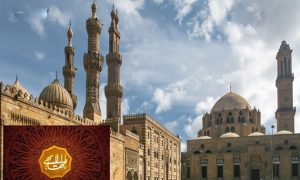
Al-Azhar University has been central to Muslim intellectual thought for over 1,000 years. When the scholars from Al-Azhar provide fatwas (legal opinions issued by an Islamic scholar), the rulings offered are not merely answers to questions. They often serve as reference points for:
- Religious leaders
- Governments
- Courts
- Communities worldwide
These institutions seek religious legitimacy over questions related to Islamic practice.
Founded in ۹۷۰ CE, Al-Azhar has been an authority over the majority of Muslims for more than a millennium. It is known for its rational, moderate interpretation of the legal tradition that integrates the four main schools of Islamic law. What makes Al-Azhar distinctive is that it does not speak from the margins; it speaks from the center, representing the Muslim community with balanced religious positions that avoid extremes or political manipulation of religious authority.
Global Influence
Due to this trust, Al-Azhar’s rulings extend well beyond Egypt. Its influence can be found across:
- Africa
- Southeast Asia
- Muslim communities in European countries
Countless scholars, imams, and judges have studied at Al-Azhar and continue to consider its fatwas as central to their duties.
Fatwas That Made a Real Difference
Throughout its long history, Al-Azhar has issued numerous critical fatwas that engaged modern issues while remaining firmly rooted in Islamic tradition. These rulings played a pivotal role in defending Islam and Muslims across the world.
Some notable examples include:
I) Condemning Terrorism
-
- Al-Azhar condemned groups like the Islamic State unequivocally.
- Declared all extremist groups as antithetical to Islam.
- Enabled governments and Muslim communities to counter extremism on a religious basis.
II) Permitting Organ Donation
-
- In the 1980s, Al-Azhar opined that organ transplants are allowed under Islamic law if ethical conditions are met.
- This ruling contributed to medical advancements and saved many lives (Padela et al., 2020).
III) Supporting Women in Leadership
-
- Al-Azhar permitted women to serve as judges and political leaders.
- Based on sound Islamic principles.
- Resulted in greater participation of women in public life in some countries.
IV) Standing for Jerusalem
-
- In 2017, when the U.S. government recognized Jerusalem as Israel’s capital, Al-Azhar quickly hosted a major conference rejecting the recognition.
- Enabled a unified religious and political responseacross the Muslim world.
These examples show that Al-Azhar does not stand idly by during pivotal issues. Its fatwas not only shape religious thought but also catalyze communities to respond to global events.
Part B: Al-Azhar and the Bahá’í Movement
A Fatwa That Matters
Al-Azhar has produced a ۹۶-page Arabic book with a fatwa against the Bahá’í movement, which emerged in the 19th century as a religious group claiming new revelations after the Prophethood of Muhammad (peace be upon him).
The length and depth of the fatwa demonstrate how seriously Al-Azhar treats the matter.
Core Issues Examined
The fatwa addresses critical theological concerns:
- The claim to prophets after the finality of Muhammad (PBUH).
- Teachings that contradict the fundamental beliefs of Islam.
- The danger of creating religious confusion among Muslim societies.
Global Relevance
The book is currently being translated into English by a conscientious Muslim who has taken the task as an obligation—may Allah bless and reward him. Once published, it will likely become a central reference point for scholars and institutions examining the Bahá’í question from an Islamic theological and legal perspective.
What sets this fatwa apart is that it comes from one of the most respected institutions in Islam, not a fringe voice. The ruling will:
- Help Muslims worldwide recognize the Bahá’í faith as a man-made system.
- Expose its links with anti-Islamic organizations.
- Highlight its dangers as what Al-Azhar considers one of the deadliest enemies of Islam and Muslims today.
Prayers for Guidance
We pray to Allah (SWT):
- To help us read and understand these fatwas from the pious and learned scholars of Islam.
- To protect us from this dangerous and hidden enemy.
- To accept the selfless services of Al-Azhar and allow it to continue guiding the Muslim Ummah in times of need.
References
- Abou El Fadl, K. (2019). Reasoning with God: Reclaiming Shari’ah in the Modern Age. Rowman & Littlefield.
- Padela, A. I., Shanawani, H., & Arozullah, A. (2020). Ethics of Organ Transplantation in Islam: Principles and Debates. American Journal of Bioethics, 20(2), 14–۲۰٫
- Skovgaard-Petersen, J. (2022). Al-Azhar and the Shaping of Modern Islamic Authority. Journal of Islamic and Middle Eastern Studies, 38(4), 213–۲۳۶٫
- Omar, M. (2021). Al-Azhar’s Outreach in Africa: Countering Extremism Through Education. African Security Review, 30(3), 221–۲۳۷٫
Keep in touch with us: bahaismiran85@gmail.com



