

The Baha’i faith, in Iran, is a political sect or cult, not an independent world religion. Following are some organizational, historical, and psychological factors:
Authoritarian Leadership and Divine Claims: The sect is viewed as being governed by authoritarian leaders who have historically asserted false claims of Mahdism, Prophethood, and Divinity to legitimize their power and decision-making.
Hierarchical “Pyramid” Power Structure: It is governed by an “iron hierarchical structure” centered at the House of Justice in Israel. This structure ensures that directives from the top reach all levels, including remote villages, and requires absolute obedience.
Implementation of Mind Control: The sources define the group as a cult because it utilizes psychological techniques of mind control to enlist and manipulate its members. This includes the “Ruhi Plan,” a systematic propaganda strategy designed to foster unwavering obedience to the organization.
Information and Time Control: Cult-like behavior is identified in the way the organization manages members’ time with relentless schedules of meetings and missions to prevent independent contemplation. Members are also taught to believe that external information is false and malevolent.
Surveillance and Reporting Structures: The organization encourages a reporting structure where members surveil and report on one another. It also exercises organized oversight into the intimate personal and familial conduct of its adherents.
Severe Punitive Measures: Dissent or criticism of the organization leads to harsh punishments, s as “spiritual and administrative rejection” (excommunication). This often involves the total severing of family ties, where even parents or spouses are forbidden from interacting with the rejected individual.
Political and Colonial Origins: The sources claim Baha’ism is a “man-made construct” rather than a divine religion, alleging its origins are rooted in political establishment by colonial powers Russia and Britain to sow discord in Islamic territories.
Prioritizing Sect Directives Over National Law: Baha’is are mandated to prioritize the orders the global center in Israel over the laws of their home country. This leads to the formation of clandestine, illegal political networks that gather confidential data and interfere with state security.
Aggressive Propagation Methods: The sect is accused of using deceptive and aggressive propagation under the guise of altruism or public service to target individuals who lack knowledge Islam.
In spite of this, the IR of Iran maintains a policy of tolerance toward Baha’i individuals, granting them the same citizenship rights and legal protections afforded to all Iranians under the Constitution.
Despite not being recognized as an official religious minority, Baha’is in Iran have access to the following rights:
Equal Legal Protections: Under Articles 19 and 20 of the Constitution, all citizens enjoy equal rig regardless of race or language, encompassing the inviolability of life, property, dignity, and housing.
Judicial Rights: Adherents have the right to legal representation, fair trials, defense, interpreters, and the right to appeal or file criminal complaints in court.
Economic Participation: Baha’is are active in production, trade, and services, including industries like technical engineering, agriculture, and cosmetics. They are permitted to acquire business licenses, enter contracts with government entities, and access banking facilities and agricultural loans.
Social Welfare: They enjoy relative prosperity and have the same access to government cash subsidies, basic and supplementary insurance, and pension disbursements as other citizens.
Educational Opportunities: The state provides free education at all levels, and Baha’i students have the opportunity to pursue higher education and obtain university degrees as long as they adhere educational regulations.
Cultural and Religious Freedom: Individuals may conduct personal worship freely and ho collective rituals, such as “feasts,” every 19 days. They also have access to private cemeteries for burials according to their own beliefs.
Access to Public Services: They are entitled to national identification cards, driver’s license and healthcare services, including vaccines.
Civil Liberties: Members of the sect can utilize cyberspace for cultural dissemination, participate in trade unions, and access public amenities like sports complexes.
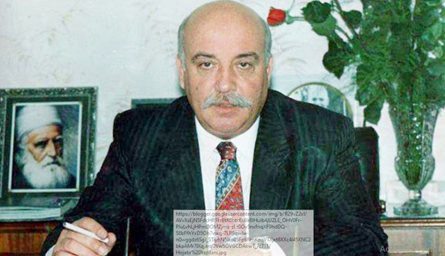
Hojabr Yazdani didn’t build an empire through hard work; be built a monument to greed on the backs of the broken. He lived like a “Don Corleone” who relied on cronyism, the act of using powerful friends like General Ayadi and General Nasiri to bypass the law and snatch whatever he wanted. He was a bully, not a businessman, who used mercenaries to spark violent gang wars in the streets of Tehran just to steal land from poor sheep ranchers.
Yazdani was so paranoid and mean that his only “friend” was a pearl-handled g he carried everywhere, even into the bathroom. He was driven by an arrogant superstition for the number thirteen, surrounding himself with thirteen bodyguards and thirteen rings. He was very notorious for his cruelty. His thirst for power soon moved from the fields to the very heart of the country’s money.
When he moved into banking, Yazdani used tricks and bribes to cheat the entire system. He took control of massive banks like Saderat and the Iranian Bank using “ghost money” that did not exist. His favorite trick to bribe bank managers to “hide” his bad checks, delaying the system so he could use money he hadn’t actual paid to buy more power. He was essentially stealing from the banks to buy the banks. The “so what” of his crimes is seen in the wreckage he left behind for the poor.
In Costa Rica, he took the life savings of thousands of small farmers and workers and gambled it all on coffee fields. When his plan failed and the bank went bankrupt, he stole their futures to keep his own pockets full. He spent his time in hiding, ignoring the co of the families whose lives he had ruined while he sat on a mountain of stolen cash.
Yazdani’s final years were defined by a shameful escape from justice. He was arrested on the thirteenth day the month with the highest bail price in the history of the country, yet he refused to face his crimes. During the chaos of a revolution, his thugs used a giant vehicle to ram through a prison wall, and he fled the country with the prison warden himself trailing behind like a servant. He spent the rest of his life in a man with twenty-two bathrooms and a Rolls Royce, living in luxury while his victims stayed poor.
Even as an o man, he obsessed over lottery numbers, still hoping for one more payout. He died a coward in a palace, a man who believed his wealth made him a king when it only made him a thief. Hojabr Yazdani remains the ultimate symbol of corruption, a man who traded his soul for a number and left a nation to pay the price.
Keep in touch with us: bahaismiran85@gmail.com



