
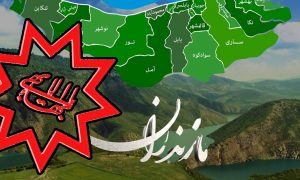
Sari and its suburbs are of the densely populated centers of the Baha’is during Bahaism lifetime. During Ahmad Shah’s periods of time, the wealthy heads of two powerful clans of this region called Abdul Maleki and Kalbadi were Baha’is and naturally the Baha’is were present among their followers.
In addition to Sari and Barforoush (Babol) cities in which a group of wealthy and influential Baha’is resided late 19th and earlier 20th centuries, such as Kalbadi, Derakhshan and Mogaddas families in Sari and Shariatmadari family in Babol, the following cities and villages must be pointed out: Amol, Arti, Arab Kheil, Ali Abad (Shahi), Fereydoun Kenar, Kafshkar Kala and Mahforouzak.
The spiritual assemblies were existed in all of these villages. Among these villages, Darzikala and Kafshkar Kala which are of Ali Abad clans were full of Baha’i population which is known as “Babi villages”.
In 1329 S.H., it is reported that the population of Kafshgar Kala is 1600 people. The tombs of some famous Baha’is are located at Mahfrouzak (Mahforoujak) village out of whom Mullah Alijan Makforouzaki entitled Ali A’ala is the most famous. In 1329 S.H. 560 people were residing in this village.
The most famous Baha’i families of Gorgan are Ebtehaj family from the generation of Ebrahim khan Ebtehajul Molk Gagani and Sarkhosh family from Mirza Yahya Khan Sarkhosh’s generation.
In most Gorgan’s cities and villages including Gonbad Kavous, Gaz port, Minou Dasht, Koroun Kaftar, Kalaleh, Kalikesh, Ghonili, Badi’a village, Qarch Qaj, Qarch Shou, Ghorogh, Fadhel Abad, Shir Abad, Ramiyan, Khousheh, Khan Bebin, Jalalieh, Pichak Mahalleh, Pahlavı, Dej Bamshak Shah Pasand, Bajgir, Rahmat Abad and etc.
In 1345 S.H. when Abbas Hoveyda who was from a famous Baha’i family was prime minister, Iran was divided into 24 Amri parts. Each part possessed a central part.
The Amri parts and 24 centers were as follows:
I) Abadeh “Abadeh“.
II) Eastern Azerbaijan “Tabriz”
III) Western Azerbaijan “Rezaiyeh”
IV) Isfahan “Isfahan”
V) Babol “Babol”
VI) Gorgan “Gorgan”
VII) Persian Gulf ports and island’s “Abbas port”
VIII) Ghaenat “Birjand”
IX) Khorasan “Mashhad”
X) Khuzestan “Ahwaz”
XI) Zahedan “Zahedan”
XII) Sari “Sari”
XIII) Sangsar “Sangsar”
XIV) Tehran “Tehran”
XV) Arak “Arak”
XVI) Fars “Shiraz
XVII) Qazvin “Qazvin”
XVIII) Kashan “Kashan”
XIV) Kerman “Kerman”
XX) Kermanshah “Kermanshah”
XXI) Gilan “Rasht”
XXII) Neyriz “Neyriz”
XXIII) Hamadan “Hamedan”
XXIV) Yazd “Yazd”
The most important one is Fars and Mazandaran. There were three faith centers in Fars (Shiraz, Abadeh, Neyriz) and there were three faith centers in Mazandaran: Sari, Babol and Gorgan. In 1349 S.H., this number became 67 centers and they must have been 1100 assemblies in 5-year plan late Pahlavi Kingdom periods of time.
Maybe, the main reason of Bahaism approach to proselytize and reside Bahaism in northern regions of Iran particularly Mazandaran province is their value in the field of agriculture and tourism. As a matter of fact, this Zionistic organization has covered valuable lands having special economic aims.
Source: Majid Mahdawi, the land of darkness; criticizing Bahaism function, pp. 100-102.
Keep in touch with us: bahaismiran85@gmail.com



