
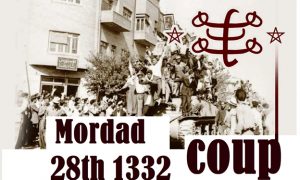
The historical documents show that the Bahaism cult heads have taken hostile position against Mosaddegh since the beginning of nationalizing oil industry. In organizational assemblies, the downfall of national government was not a calamity for the independence of Iran, but it was a kind of “divine miracle”.
Mordad 28, 1332 S.H. coup wasn’t merely a transmission of military power, but it was the output of alignment of foreign colonialism benefits and the influential interior movements. Meantime, Bahaism organization as a hidden political one played a key role in weakening national government of Dr. Mosaddegh and stabilizing Pahlavi despotism. The historical documents indicate that the heads of the cult had taken hostile position against Mosaddegh since the beginning of nationalization of oil industry movement. In organizational assemblies, the downfall of the national government was considered as the calamity for the independence of Iran and also a kind of “divine miracle”; so that, the Baha’i proselytizers were frankly mentioning in their reports that their fathers considered Mosaddegh’s downfall as his turning against Baha’ism faith” and were speaking about his failures.
This enmity was originated from organic bond between Bahaism leadership with colonial centers of Britain. When Abbas Effendi (Abdul Baha) received the knighthood and sir medals due to his strategic services to the British army in World War I, the fate of the organization was knotted with London’s benefits. On Mordad 28 when the intelligent service of the MIG and the CIA planned to overthrow Mosaddegh, the Baha’is network which has influenced on the army and offices acted as the intelligent service and executive arms. Field Marshal Fardoust, the special office manager of Shah’s intelligent service reveals in his diary that Muhammad Reza Pahlavi trusted on the Baha’is completely and employed them in sensitive jobs because he cordially believed that these people don’t conspire against the kingdom. This lack of conspiracy in fact meant the absolute loyalty of the Baha’i net to power centers that were against Mosaddegh and providing security of Pahlavi regime against the national will.
However, the great calamity happened during post-coup era known as “the golden era of Bahaism”. When Mosaddegh left the scene, people such as Abdul Karim Ayadi (the special physician of the Shah) who was the offspring of one of God’s faith’s disciples” gained power and employed hundreds of Baha’is in sensitive and key posts. SAVAK documents reveal that this influence was so systematic that at least one organizational spy was present in each office and ministry who was sending classified reports of the government and even the details of secret trainings of the army and paratroopers daily to the center of the cult in Haifa (Israel).
According to political analysis, the Baha’is considered Iran not as their hometown, but as “the promised land” where must be dominated by them. For this reason, Fardoust calls them as “innate spies” who were in lack of sense of being Iranian. The economic influence of famous people like Habib Allah Sabet Pasal and Hojabr Yazdani during the years after 1332 S.H. which was along with the governmental rants and Zionistic supports was a part of reward by the organization to help stabilize the Shah’s power after the coup. The synchronism of Dalgourki’s (the Russian ambassador) reports and the British consoles’ ones concerning supporting the Baha’is are indicating a long-termed strategy of colonialism which worked on Mordad 28th and sacrificed the Iranian independence for a political organization having a religious coverage. Hoveyda’s (the offspring of a Baha’i) influence on a 13-year presidency and providing oil for Israel in return of receiving land in the occupied Palestine complete the puzzle whose primary parts had been arranged on Mordad, 1332 S.H.
Source: Fergheh News
Keep in touch with us: bahaismiran85@gmail.com



